
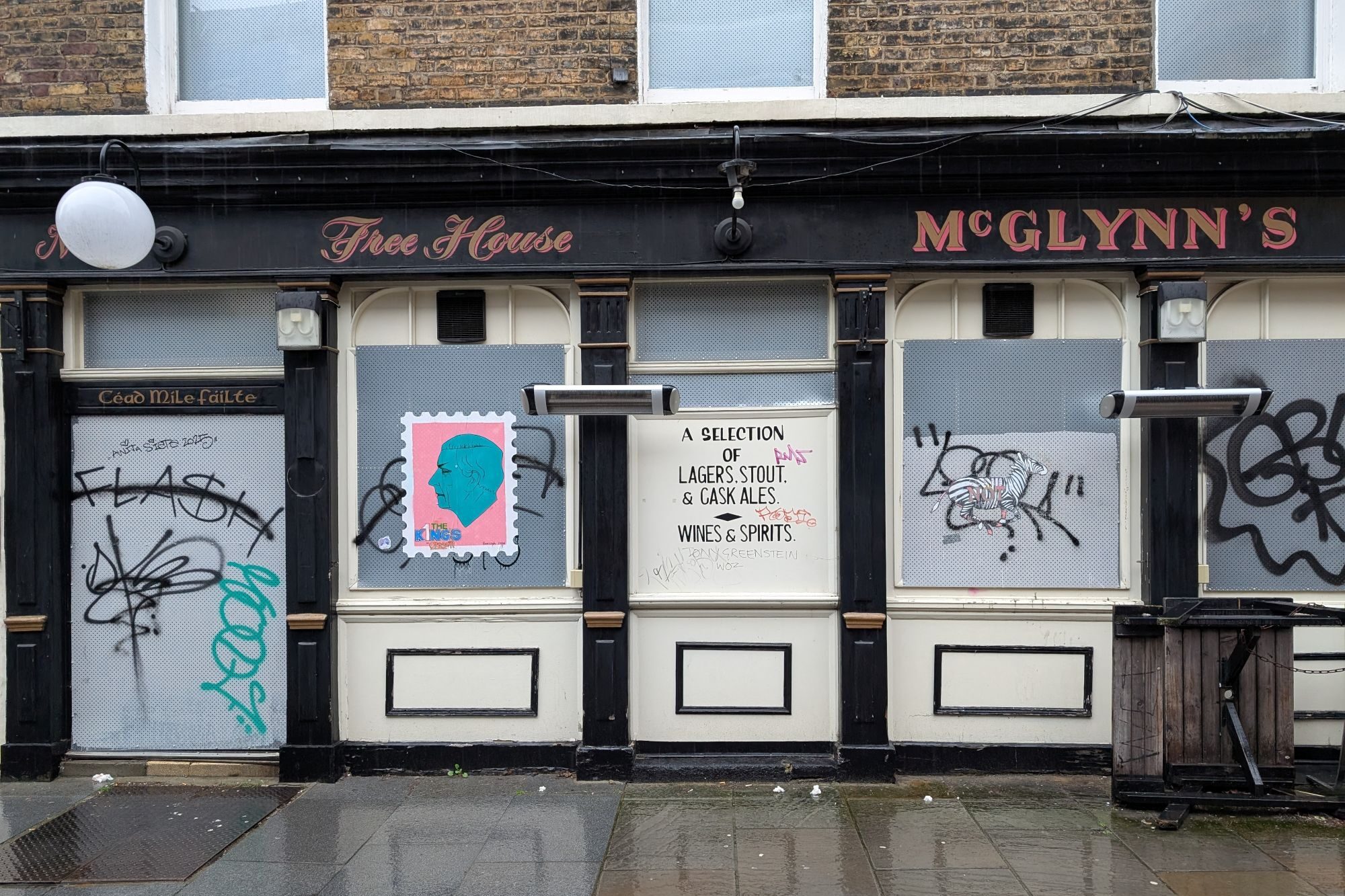
Set back on a pedestrianised street, a short walk from Kings Cross station, McGlynn’s closed suddenly in September 2023 after the death of its long-term licensee, Gerry Dolan. Gerry was an Irishman who had managed and lived above the pub since the early 1990s, his steady presence setting McGlynn’s apart from the many chain pubs which line the Euston Road. It was a ‘neighbourhood pub’, a ‘community pub’, a place that offered a sense of familiarity and homeliness in a transient part of the city.
While our research on pub closure has generally been concerned with struggling pubs, McGlynn’s was thriving up until its closure. Frequented by residents of the surrounding social housing estates and commuters alike, in its last few years it had become increasingly – even wildly – popular. When news spread online that the pub would be closing, hundreds of people headed there for the closing night causing the pub to become overwhelmed and having to shut its doors early for safety reasons.
What was the particular appeal of McGlynn’s? How did it become such an object of affection for people across the city? And what has been lost during the two years it has been closed? We spoke to former customers, staff members and local residents to assemble the story of this distinctive and much loved central London pub.
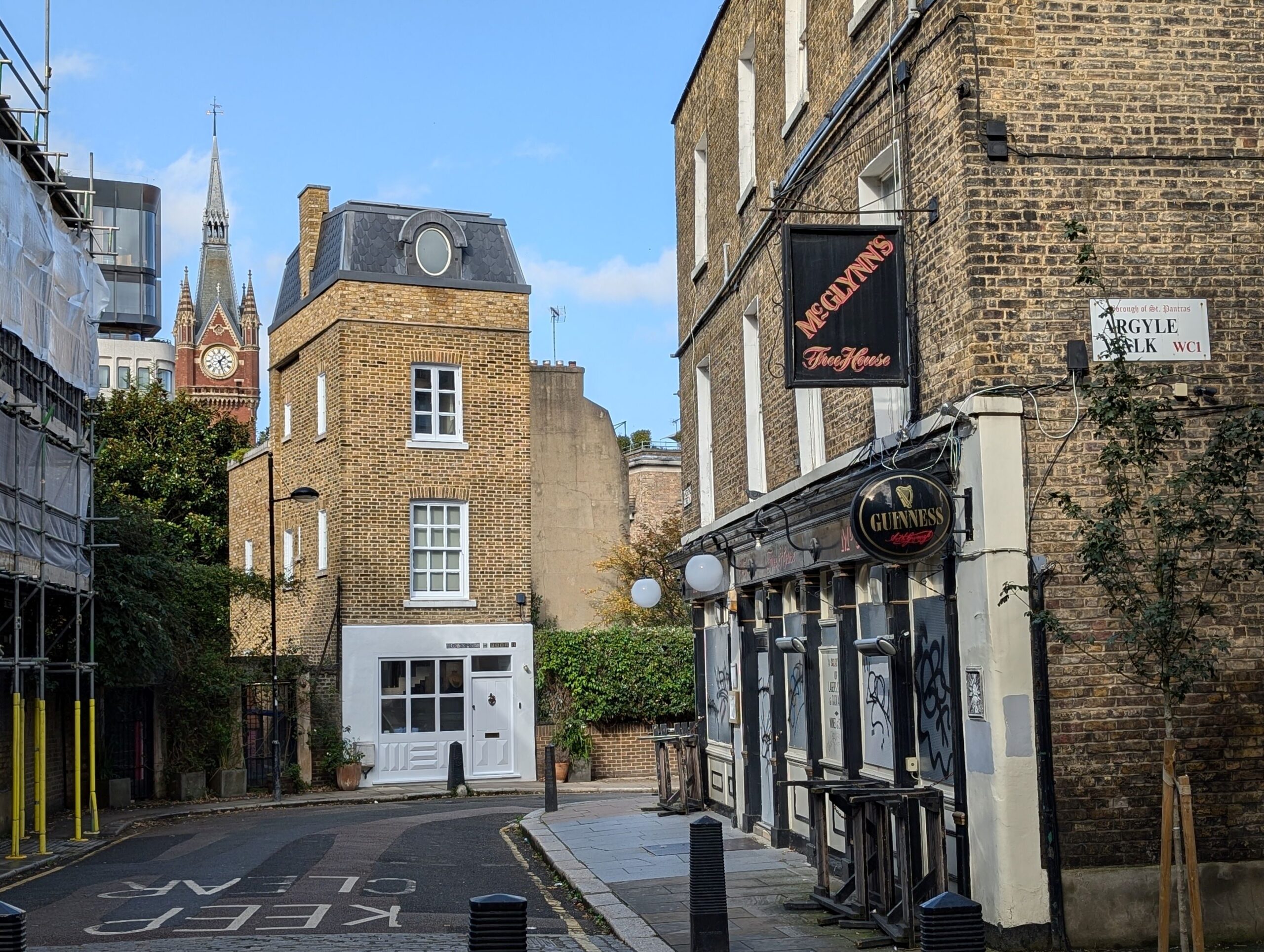
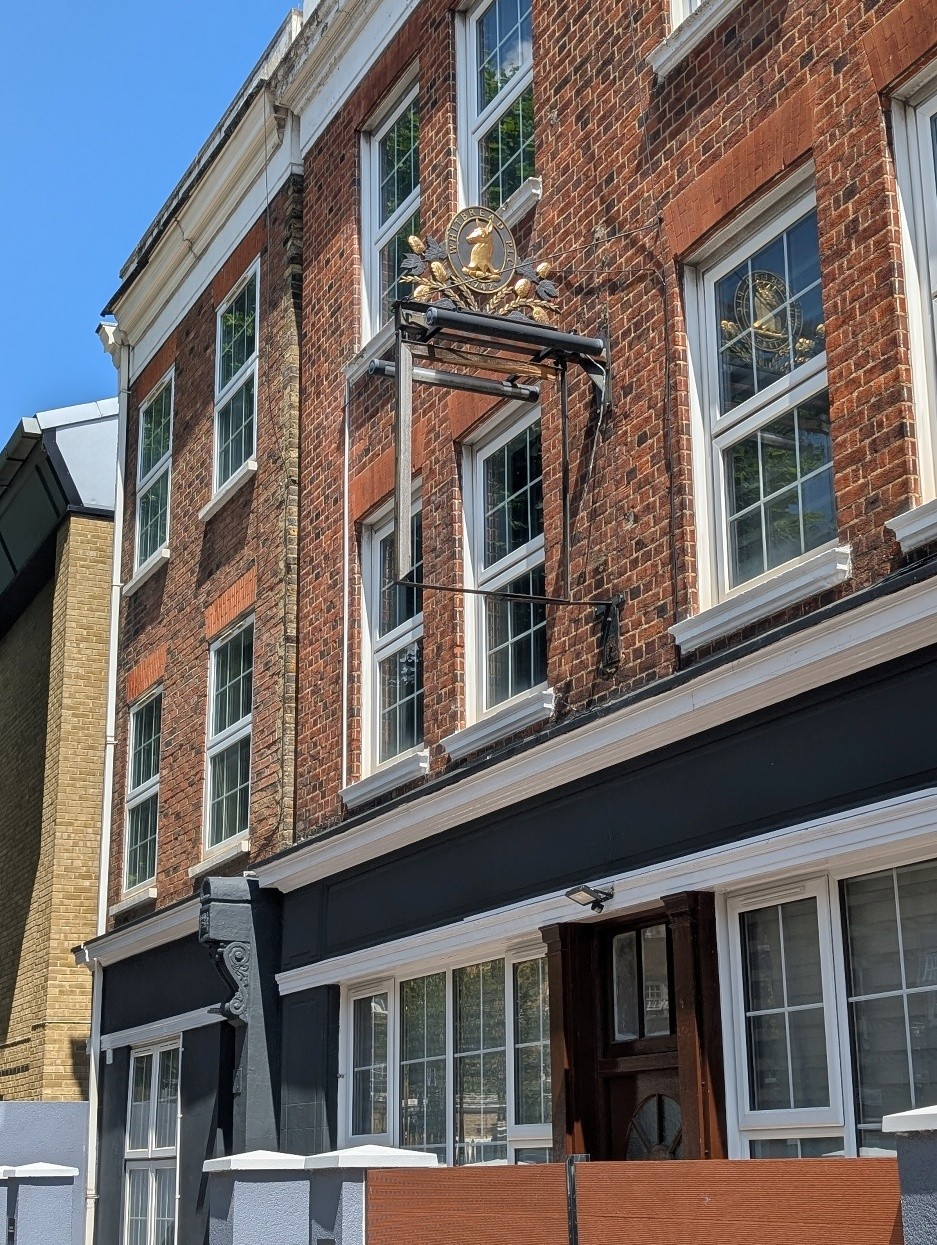
Built in the early 19th century, McGlynn’s started life as the Duke of Wellington pub, located on the boundary between the grand, middle-class properties of Argyle Square and poorer, working-class accommodation to the south. The latter was redeveloped as a model social housing estate by the East End Dwellings Company in the 1890s – now known as the Hillview Estate. The Duke of Wellington served residents of the estate, alongside two other pubs which continue trading to this day – The Boot on Cromer Street and The Dolphin on Bidborough Street.
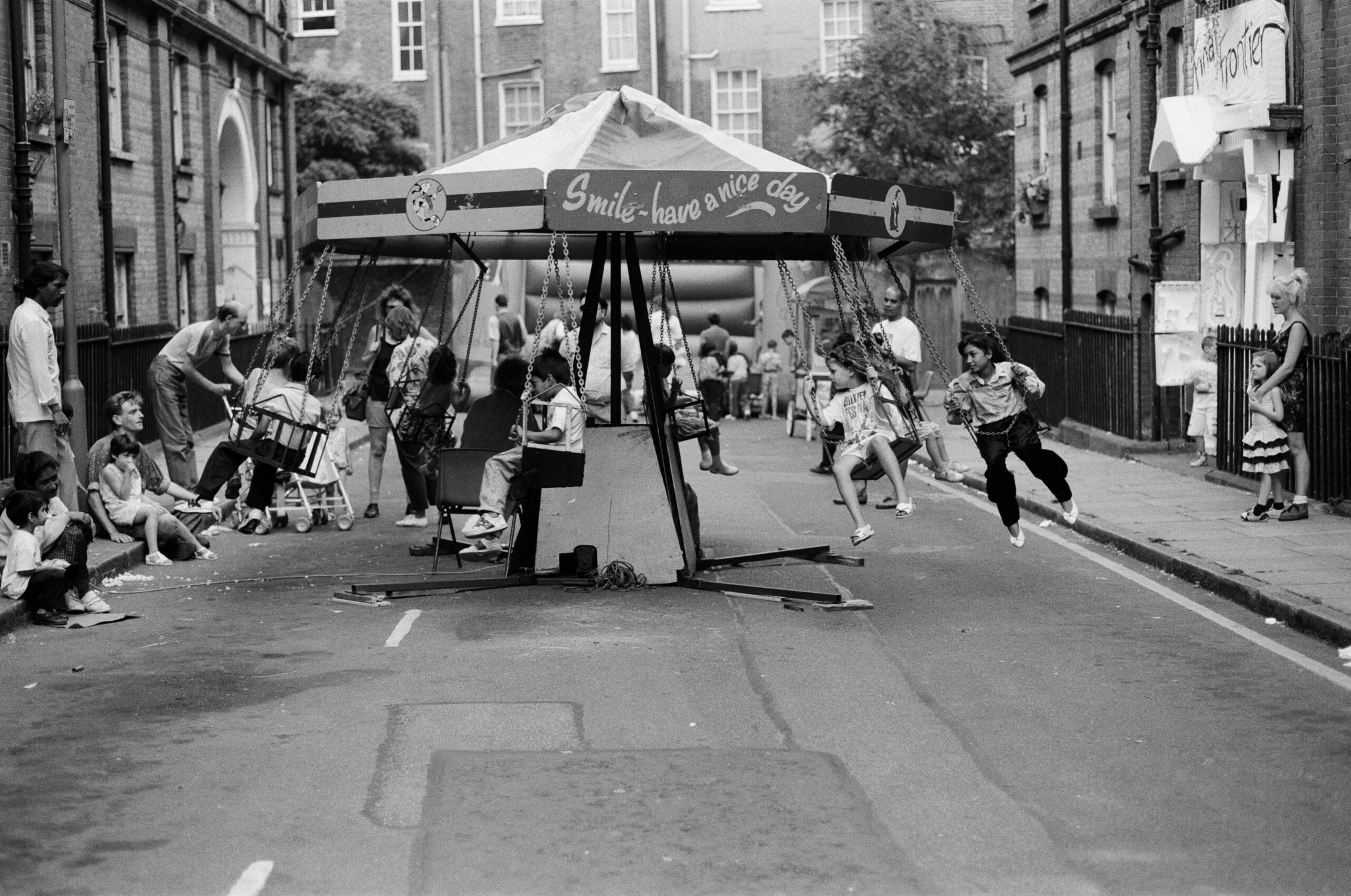
The estate itself has a distinctive history which has importantly shaped the pub. Having been left semi-occupied in the 1970s by Camden Council, the estate was squatted by an assorted group of left-wing political activists, punks, artists and students and suffered from a reputation for prostitution, drug use and violence. The squatters eventually won permission from the council to formalise their tenancies through a ‘Short Life Community Housing’ group and a great deal of effort was expended in dealing with local issues around crime, violence and antisocial behaviour. Some of the original squatters remain living on the estate today and contributed to our research.
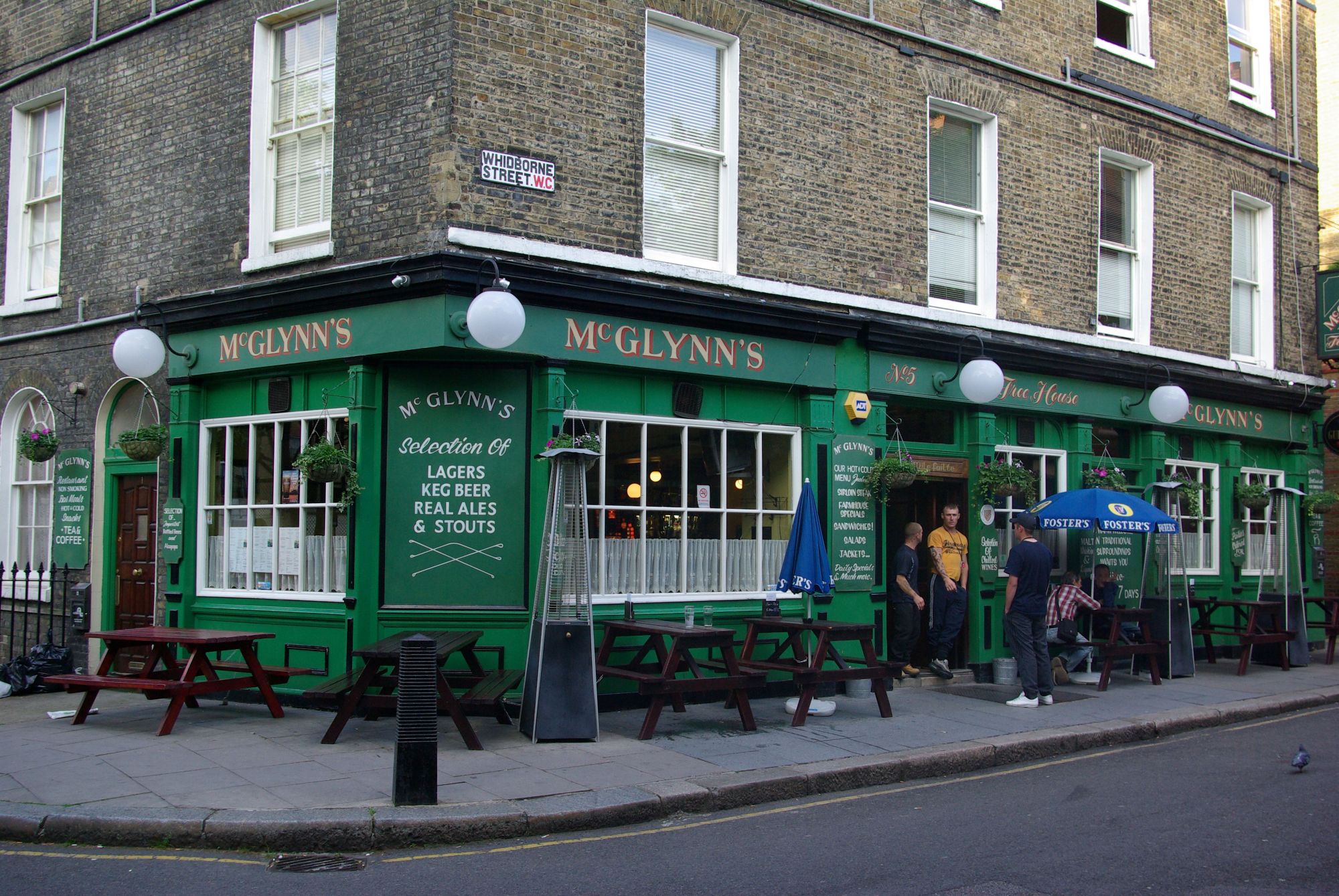
The Duke of Wellington pub was owned by Charrington’s brewery (later Bass-Charrington) for most of the 20th century before being purchased by an Irish couple, Cornelius and Noreen McGlynn, in 1993, when it was renamed McGlynn’s. As well as a meeting point for estate residents, the pub was popular with employees at Camden Council, whose main office was located on the Euston Road from 1977 to 2014.
In later years, McGlynn’s became increasingly popular, even trendy. The redevelopment of Kings Cross has seen the proliferation of new drinking places, such as a rooftop cocktail bar at the nearby Standard Hotel and a craft beer bar in the 19th century Victorian gatehouse to Euston station – ‘the Euston tap’. In this context, a traditional pub like McGlynn’s might have easily become marginalised as an old-fashioned, ‘old-man’s pub’. But if anything, the contrast served to increase the popularity of the pub. It developed a reputation as a back to basics, ‘classic London boozer’; its laid-back atmosphere and familiar, friendly staff an antidote to the novel, more upmarket options along the Euston Road. As the writer Jimmy McIntosh has argued, the increased popularity of the traditional pub can be seen as part of a broader cultural trend:
‘the aesthetics of the traditional pub have come back into fashion again. The dull interiors of elder millennial bars and restaurants – neutral, minimal, clean – are being shunned for a celebration of carpet, colour, and fizzy continental lager.’
Liam, the former bar manager at McGlynn’s in his early 30s, was influential in bringing in a younger crowd of people, many of whom worked in the offices of media and tech companies moving to Kings Cross.
‘When Kings Cross had its glow up and they started building, so Universal Music moved in, Havas Media moved in, Sony Music, Polydor Music, we started getting a much younger crowd’.
Using skills he’s learnt as a former nightclub promoter, Liam used social media to reach new audiences. He built a relationship with staff at The Standard Hotel, holding their summer parties at which there would be up to 500 people drinking on the pedestrianised street outside the pub.
This street increasingly became an asset following the covid lockdowns, when the government was advising people to socialise outside. McGlynn’s gained a reputation as a ‘hidden gem’ away from the hustle and bustle of the Euston Road. Daniel – an employee at the nearby British Library – explained how the front of the pub ‘caught the sun [just] as work was finishing’ and was somewhere he enjoyed relaxing with colleagues. Customers could sit on the benches outside but also tended to congregate along the pavements, either standing or sitting on the curbstones.
Liam went as far as to say that the pandemic was the ‘best thing that happened to that pub’. As word spread, the pub became busy seven nights a week, prompting Liam to stop promoting the pub on social media – ‘we were just too busy for what we could actually handle’.
As word of McGlynn’s imminent closure spread, rumours began to circulate that the site would be converted into flats or a wine bar. North London CAMRA tweeted photos showing crowds outside the pub.
Bar manager Liam saw these rumours about redevelopment and told journalists that there was no plan afoot to turn the pub into flats. However, that did not stop the issue of redevelopment being raised again and again in our interviews and in online forums.
Such concerns about redevelopment reflect recent experience. Since 2000, more than a quarter of pubs in London have closed, with some London boroughs seeing declines of more than half. Rather than sitting empty and unused, London pubs are relatively quickly turned over to other uses – often flats. There is a simple economic logic to this. A Centre for London report on pub closure from 2021 reports how:
‘In 2011, the Parr’s Head pub in Camden was bought for £500,000, sold on for £1.3 million once planning permission was granted for residential conversion, and eventually fetched £3 million as six separate flats.’
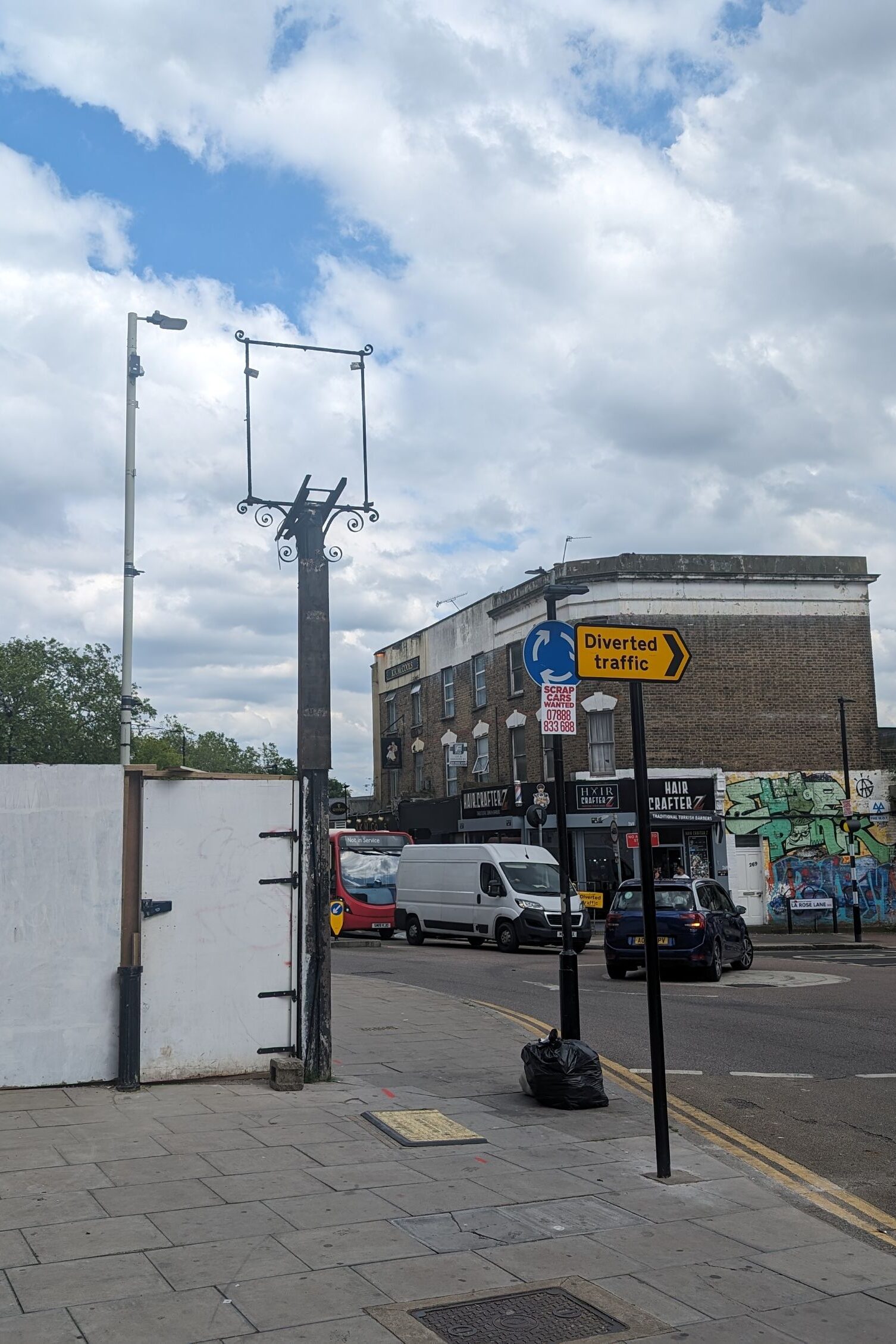
In this context, a whole online community of blogs and social media accounts has emerged, dedicated to mapping the existence of what are known as ‘deadpubs’ or ‘ghostpubs’. While a deadpub refers to any closed or demolished pub, a ‘ghostpub’ refers to a pub which has been converted but where visual reminders of its life as a pub are still evident.
Before considering in-depth the appeal that McGlynn’s held to its customers, it should be noted that not everybody was upset about the closure. Some Hillview residents had become concerned about noise. Izzy, who has lived next door to the pub since 1996 told us how she had begun to find it unbearable, particularly since the pandemic, with the street outside her flat busy with people six nights a week:
‘The whole outdoor section from the pub pavement all the way across the road, all the way to our gate, into the alleyway on both sides would be full of people. It would be absolutely full of people.’
The noise levels would be such that she wouldn’t be able to listen to anything without using headphones. Sleeping was also an issue, not helped by the fact that customers would sometimes linger finishing their drinks from plastic cups after the pub had closed for the night. Izzy showed us the small, enclosed mezzanine area in her flat – essentially a loft space – where she would sometimes retreat to escape the noise of her bedroom which overlooked the street below.
Izzy had collected signatures from 22 other residents, calling on the council to take action, and succeeded in getting the council to impose a 10pm curfew on drinkers being outside. But she felt that this was inadequately enforced. The pub closing was therefore a big relief.
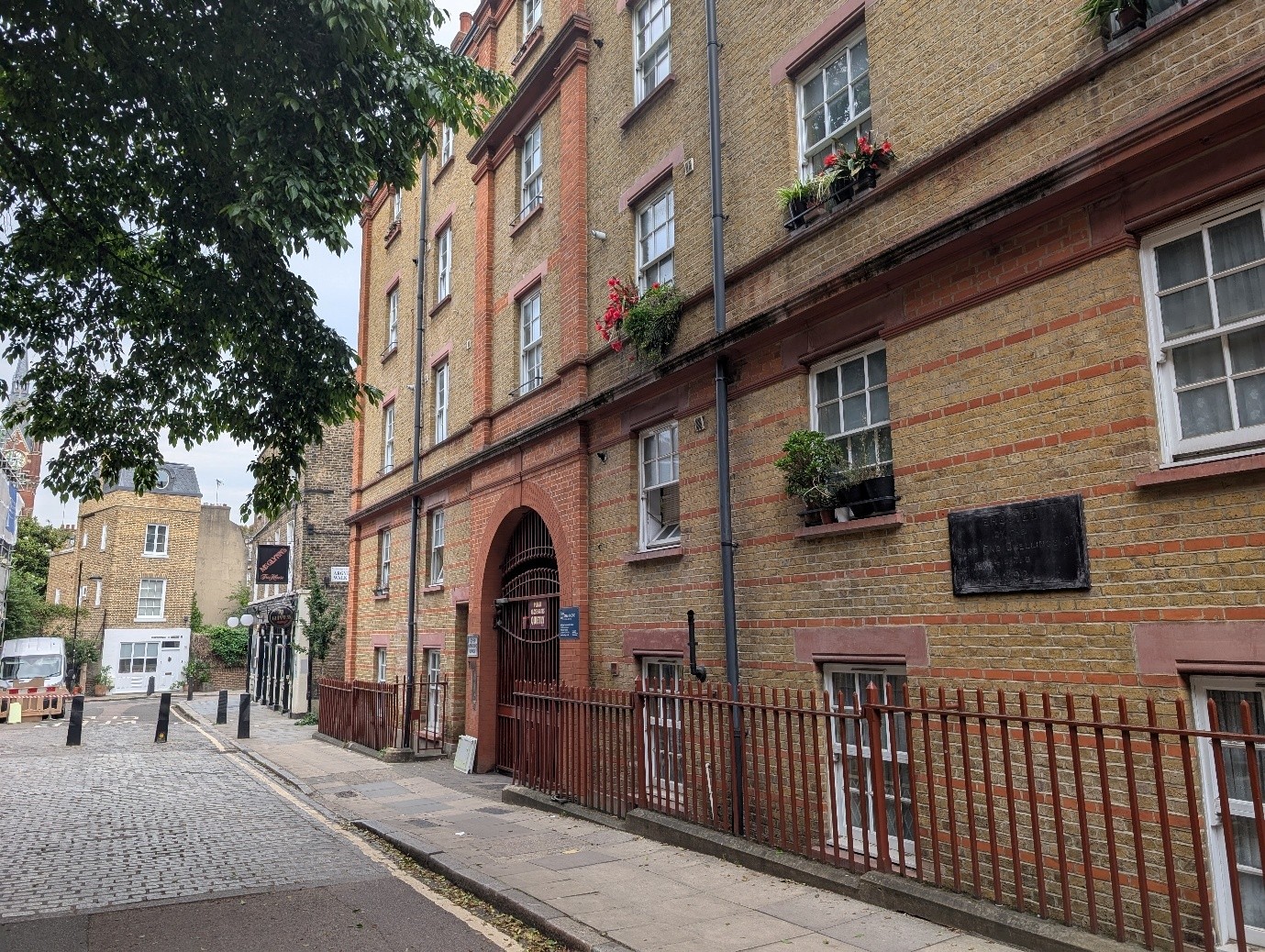
In contrast, other locals felt a deep sense of loss about the pub, as well as for the loss of the landlord Gerry as a member of their community. Geoff, a musician of Anglo-Indian descent who first came to the Hillview Estate as a squatter in the 1970s, described it as the estate’s ‘local watering hole’, closely associated in the minds of residents with Gerry as landlord. Regulars from the estate would talk of ‘going down Gerry’s’ and ‘going down McGlynn’s’ interchangeably.
Geoff stressed the importance of the pub over the years in creating relationships between different parts of the local community, which was vital in addressing the estate’s challenges with violent crime and antisocial behaviour in the 1980s and 1990s. The pub had played an important role during the estate’s annual Hillview Festival, running since the 1980s. Rather than spend money on borrowing Portaloos, people coming to the festival were able to use toilets at the pub, with Gerry also providing some money for the 2005 festival when they were short of funds.
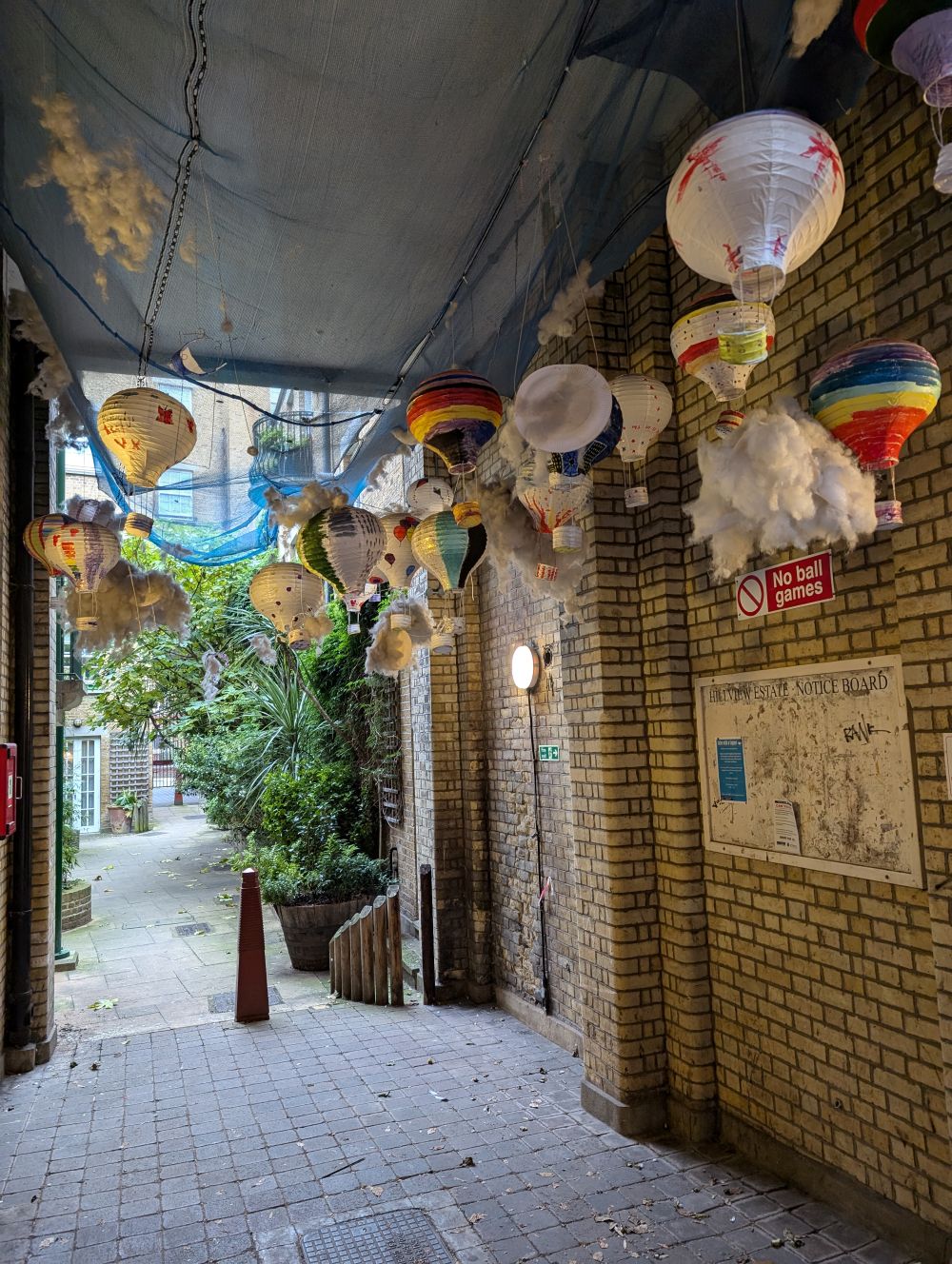
Geoff expressed a feeling that the area had become less safe since the pub’s closure. Positioned next to an alleyway which was ‘a bit of a blind spot’, Geoff said that the pub was a ‘key location for safety’ and that there was now ‘a lot of street activity that wasn’t there before’, some of it minor but some of it more serious and violent. Indeed, the day after our interview he sent us a photo of a police leaflet put through his door regarding the murder of a man after ‘a sustained assault outside McGlynn’s public house’. ‘It’s added quite a bit of uneasiness in the community which has already been under considerable stress’, Geoff explained. ‘40 years ago we had similar trouble in a slightly different way, but now it’s reappearing’.
Catherine, a photographer living in the area since 1981, similarly pointed to the role of the pub as a ‘safety net’. She described how informal chats with her neighbours outside the pub on her way to and from her home helped to enhance the ‘cohesiveness within the neighbourhood’:
‘… it’s about supporting the village in a way. When you have that informality and people are coming home from work, and then they see people they know on the street corner, having a drink, there’s these informal chats. And even though they’re informal, some of them can be quite important.’
Corroborating Geoff’s perceptions of an increase in crime and antisocial behaviour in the area since the pub’s closure, Catherine described how the alleyway – Argyle Walk – had become a place ‘full of drug interactions, and a lot of shouting’. It had increased to the extent that she had become ‘somehow immune to it’ in a way that worried her in terms of sustaining the community vigilance and cohesiveness that had previously succeeded in reducing violent crime:
‘[our neighbourhood] always has been, or was, quite rough, you would always be keeping an ear out, and checking just in case something terrible was happening or – particularly for women. Now, if you get lots of stuff going on, you kind of just go, “oh, can’t be bothered”, and I think that’s problematic’.
The closure of McGlynn’s had an acute impact on its former staff. This was accentuated by the fact that many staff had worked there for a decade or more, with some living in accommodation above the pub. Not only did Gerry have a flat, but there were two other rooms let out to staff members – both of whom therefore were made homeless when the pub closed.
One of these members of staff was Liam, the bar manager introduced above. He was living above the pub at the time of its closure, having been working at McGlynn’s for over 10 years and was significantly impacted by its closure, describing himself as coming ‘very close to having a mental breakdown’:
‘Gerry was one of my closest people in my life anyway. Him dying, then me having to close the pub, then let go all the staff, then I was homeless and … nobody ever teaches you how to close a pub. I can go and open a new pub tomorrow, but nobody ever taught me how to [close a pub]… So yeah, I really struggled.’
Liam was eventually able to find work at a new Irish pub in the City called Feeney’s, and subsequently moved to work at the well-established Irish pub The Sheephaven Bay in Camden. He reflected that ‘as soon as I started working again, [my] mental health sorted right out.’
For other members of staff, however, the transition to another job was not so simple. Dave, in his mid-sixties, was the general manager of McGlynn’s, having worked there for 17 years. Suffering from worsening rheumatoid arthritis and only a couple of years away from retirement, getting another job was going to be difficult. With his redundancy pay and last pay cheque tied up in probate, he went to the Job Centre to apply for Universal Credit. But for the first 6 months he was told he was only eligible for £139 a month due to an issue with his taxes, leaving him having to resort to using food banks to meet his basic needs.
These financial difficulties came on top of the personal, emotional fall-out of Gerry dying and the subsequent closure of the pub. Dave particularly stressed the impact of suddenly losing contact with colleagues and regular customers who had become like a surrogate family to him after years of working long shifts at ‘unsociable hours’:
‘I became very, very sad, very lonely, because all the people that I was associating with were all in the pub… they were my family, that’s who I spent all my time with. I used to do 45 hours a week, so majority of the time I was in the pub.’
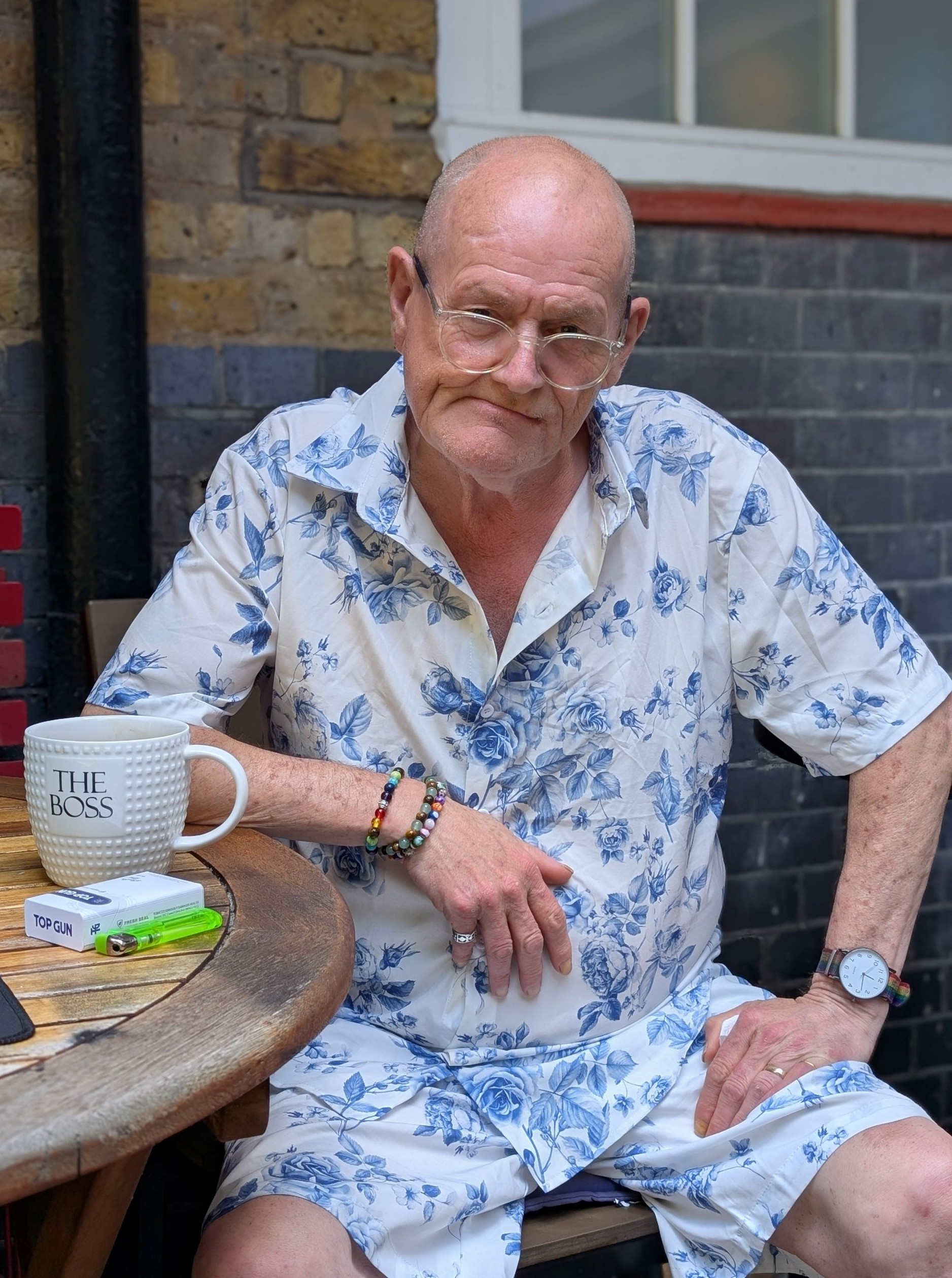
The negative impacts of McGlynn’s closure on staff were compounded by its status as something of a sanctuary for minoritised people, particularly over the last couple of decades. Dave, who is gay, told us how he had first visited McGlynn’s with his partner Andy, who has since passed away, in around 1999. They had recently moved to the area and after trying another local pub and feeling that ‘it’s not for us’, they went to McGlynn’s:
‘we thought, ah, we’re home, we’ve cracked it in this one, it was a lovely pub. People were very friendly, they seemed really nice, so we started drinking in there.’
When we asked him what he meant by ‘home’, he said:
‘Just the atmosphere in there, everyone was just like so nice… in every pub, there’s always a couple of bad people in there. But everyone was just – everyone knew each other, everyone was friendly to each other, and I was just…. “you don’t get this very often these days”. And as we sat there and we stayed a good few hours… Then the next day I said to Andy, “I need hair of the dog, let’s go back to that pub.” “Hi, how are you today? Bit hungover, are we?” It was like they cared.’
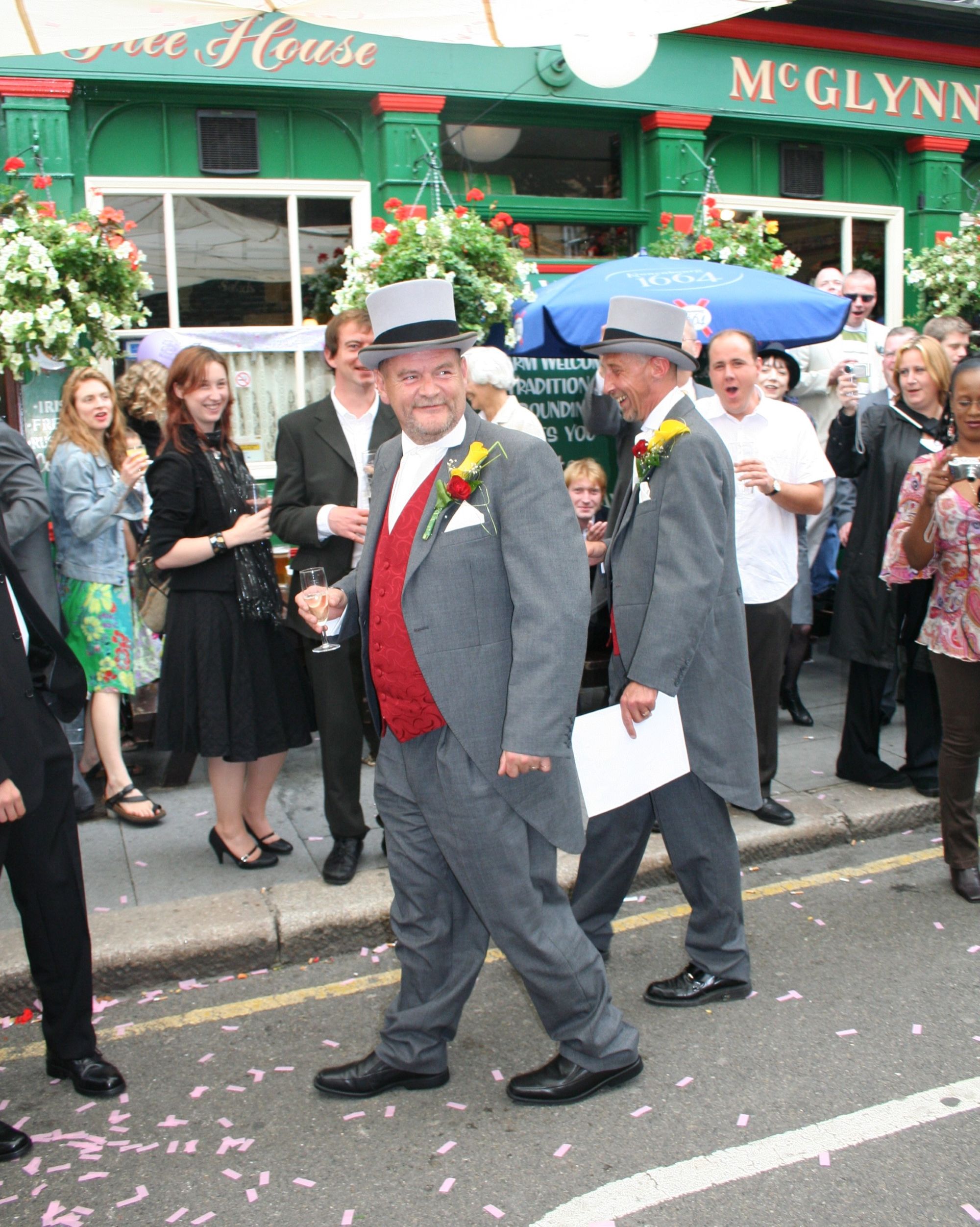
Dave and Andy began to get to know Gerry. Dave affectionately recalled how Gerry would often come and sit down at their table and began a habit of inviting himself back to their flat for dinner. The friendship blossomed, with Gerry coming out as gay to Andy and Dave some years later. In 2007 Gerry was the best man to Andy at his and Dave’s civil partnership ceremony, the reception for which was held at the pub.
Dave and Andy had also spent a few years living in one of the rooms above the pub, after being evicted from a previous flat. Dave explained how this was one of a few moments of housing instability he had faced, which also included a period of squatting after moving to London from Liverpool in the 1980s, and a spell of rough sleeping at The Embankment, during which time he experienced homophobic violence from other rough sleepers. McGlynn’s was a home for Dave both literally and metaphorically; a kind of sanctuary perhaps – the loss of which has left him feeling bereft:
‘When the pub closed, I have to admit, my life totally changed… I never realised how much of my life was in that pub’.
Other interviewees commented on McGlynn’s welcoming qualities. Catherine remarked that McGlynn’s was one of very few pubs where she would have felt comfortable entering alone as a woman in the 1980s. This distinctive quality of McGlynn’s she linked to the history of the area; it being a ‘huge hub for prostitution and all sorts of things’ meant that there was a certain level of acceptance and ‘respect’ for people of different backgrounds:
‘… there’s something about pubs just saying, “Yeah, do come in,” you know, whether you’re a prostitute, or you’re a this, you know, you live in the area… Obviously not to do business, but … there was a sense of “we’re all human beings”…’
She told us how the estate was an important place in the history of feminist organising around sex work, with women involved with the English Collective of Prostitutes advocating for the right’s of sex workers through a sit-in occupation at the local church in 1982.
McGlynn’s also has a place within local histories of racism and anti-racist organising. In the 1980s the Hillview Estate and surrounding area had a significant far-right National Front presence, with the offices of Short-Life Community Housing being firebombed shortly after opening. In later decades the British National Party were active in the area, using certain hotels on Argyle Square as a base. But, as Geoff explained, while other landlords ‘turned a blind eye’ to these activities and allowed their pubs to be used by far right activists, he remembered how Gerry ‘did clamp down quite heavily’ and was ‘quite hard on bad behaviour’, such that McGlynn’s never became a base for the far-right.
This is not to say that racism, misogyny and homophobia were absent from McGlynn’s. Dave commented that, going back some years, there were people in the pub who would casually use racist or homophobic language, or who would wolf whistle at women – he attributed this particularly to builders from the many construction sites around Kings Cross in the 2000s. But he emphasised how it would be called out by staff:
‘you had the odd people use the N word, but I used to just say, “Guys, come on, we’re in the year 2000 whatever now, we don’t use them words anymore.”’
He also talked about how he playfully challenged some customers’ homophobic prejudices:
‘You’d get the odd character who’d say, “Oh, fucking queers are here again. We should be served before the queers.” And I’m like, “Queers are us, we’re always first, you’re always last. You should know better than to play with me!” (Laughs).
Dave’s presence at the bar was part of the reason that Daniel, a regular customer over the last several years and employee at the nearby British Library, described McGlynn’s as queer in a ‘low-key’ way.
‘definitely one of the guys who served behind the bar was a gay guy, and… I didn’t feel uncomfortable in any way being in that environment. Which I think some people might feel is antithetical to a traditional more working-class pub, but, yeah, it just felt like it was – I don’t know if I want to say “queer friendly” or whatever, but it just had a vibe where it wasn’t at all judgemental. I went there with my boyfriend, other queer people, and it was just generally a good time, never had any issue with that’.
In more recent years the pub had began to attract more of this clientele. As Liam explained:
‘especially once the Standard Hotel opened… McGlynn’s especially went from being very straight orientated to, you wouldn’t bat an eyelid if a transgender person walked in. At first it would be like -“what?”. And afterwards it would be like no, it was completely normal – gay, transgender.’
Similarly to Daniel, Liam reflected on how McGlynn’s belied the assumption that the existing ‘old-school’, straight, male and more working-class clientele would be unhappy about the changing demographics of the pub:
‘… it was interesting to see how the old school community… you realise quite quickly, they didn’t give a shit. You’d naturally assume that there would be some comeback with it, but they really didn’t give a shit, “just do what you want” sort of thing. That’s what I liked about McGlynn’s. Don’t get me wrong, we had fights like any other pub does, but every time we did, we dealt with it very well anyway. We wouldn’t put up with anything.’
McGlynn’s also catered to people who might be vulnerable in other ways. Catherine told us how a few of the regulars at McGlynn’s were former rough-sleeping men living in nearby hostels such as St Mungo’s. One man in particular stood out in her memory:
‘… there’s one man who is very smiley, very shy, he lives in one of the hostels and, you know, he had a space there, he was always quite neat and dapper, but you can tell that he just does not go anywhere. And he always had his space there, he felt comfortable going there’
Catherine reflected that there was something important about McGlynn’s in providing a social environment for someone like that, without them feeling the pressure of active socialising – an important feature of pubs which has come out through out research on other case studies.
Catherine also recalled Gerry’s practice of opening the pub on Christmas Day and giving ‘one or two free drinks for the locals’. Catherine regarded this as providing an important place for local people to gather, who might otherwise be at risk of feeling isolated on Christmas Day while everyone else is busy with their respective families:
‘We did really miss it last Christmas. If you’re in the flats for Christmas, it’s really nice to go have a little Christmas drink together.’
In the context of nationwide pub closure trends and what has been described as a ‘loneliness epidemic’ in Britain, the importance of the pub as a space of social connection has becoming increasingly recognised. Within this, it is specifically ‘community pubs’ – or pubs which serve a particular neighbourhood in contrast perhaps to a city-centre venue – which are argued to play an important role in facilitating the sorts of social interactions which help people to feel connected to others.
A distinctive feature of McGlynn’s, however, was that it both served this function for an immediate residential community, but also for a community that was much more geographically dispersed, who might work in the area, or find themselves often passing through when using the station. Harry, a journalist in his early 30s, told us how he would often find himself passing through Kings Cross and Euston on his way to and from work – ‘it’s always been somewhere I can bounce off quite easily’. Other people we spoke to told us how they’d been first introduced to McGlynn’s as somewhere to have a drink before catching a train to other parts of the country.
Interviewees reflected on how McGlynn’s managed to balance the intimacy of a community, with the sense that the pub was welcoming and open to all. Michael, an occasional visitor to McGlynn’s for 15 years living in another part of the city, described how the pub was host to a ‘revolving group of faces’ including office workers, professionals and students, alongside a contingent of regulars from the adjacent estate. He reflected that the pub was big enough to accommodate everyone and ensure that the regulars weren’t ‘[pushed] out’. While there was a laminated sign on the bar stating that it was ‘reserved for regulars’, who was classed as a regular was not fixed. As Daniel reflected: ‘I remember once I was allowed to sit there, and I felt very proud, like I’d somehow made it.’
Interviewees described an atmosphere of conviviality, where it was common to find yourself in casual conversation with staff members or other customers. Daniel described this as part of the reason why he decided to celebrate his 40th birthday in the pub:
‘it [the atmosphere of the pub] was always very celebratory and the people who worked there were always like, “Oh, happy birthday.” And they were always super sweet, like, when we went in just before Christmas, they’d give us a free drink and free chips or whatever, just to say thank you for coming, “happy Christmas”. So it felt natural to celebrate my birthday there. I think I did it for three years in a row’
Similarly, Darren, a former Camden Council employee, described how the ‘atmosphere’ was one of the main reasons why it became the go-to pub:
‘You would often just chat to random people in there, either at the bar or sitting outside. There was a friendly atmosphere, possibly encouraged by the landlord, I don’t know, but it did seem quite a natural place to talk to a stranger.’
As Jamila, a postgraduate student living around 25 minutes’ walk away in Soho, put it:
‘you would just strike up conversation with other people there, whether it had been because there’d been a football match on, or any kind of reason’.
A common refrain among these interviewees, when describing what they liked about McGlynn’s, was its sense of homeliness, contrasting with a more general feeling of transience in Kings Cross and London more generally. As Jamila explained:
‘it felt like a kind of small community pub, which is a feeling that you, in London, is quite rare, as big and as transient as it is. It was a nice point of familiarity.’
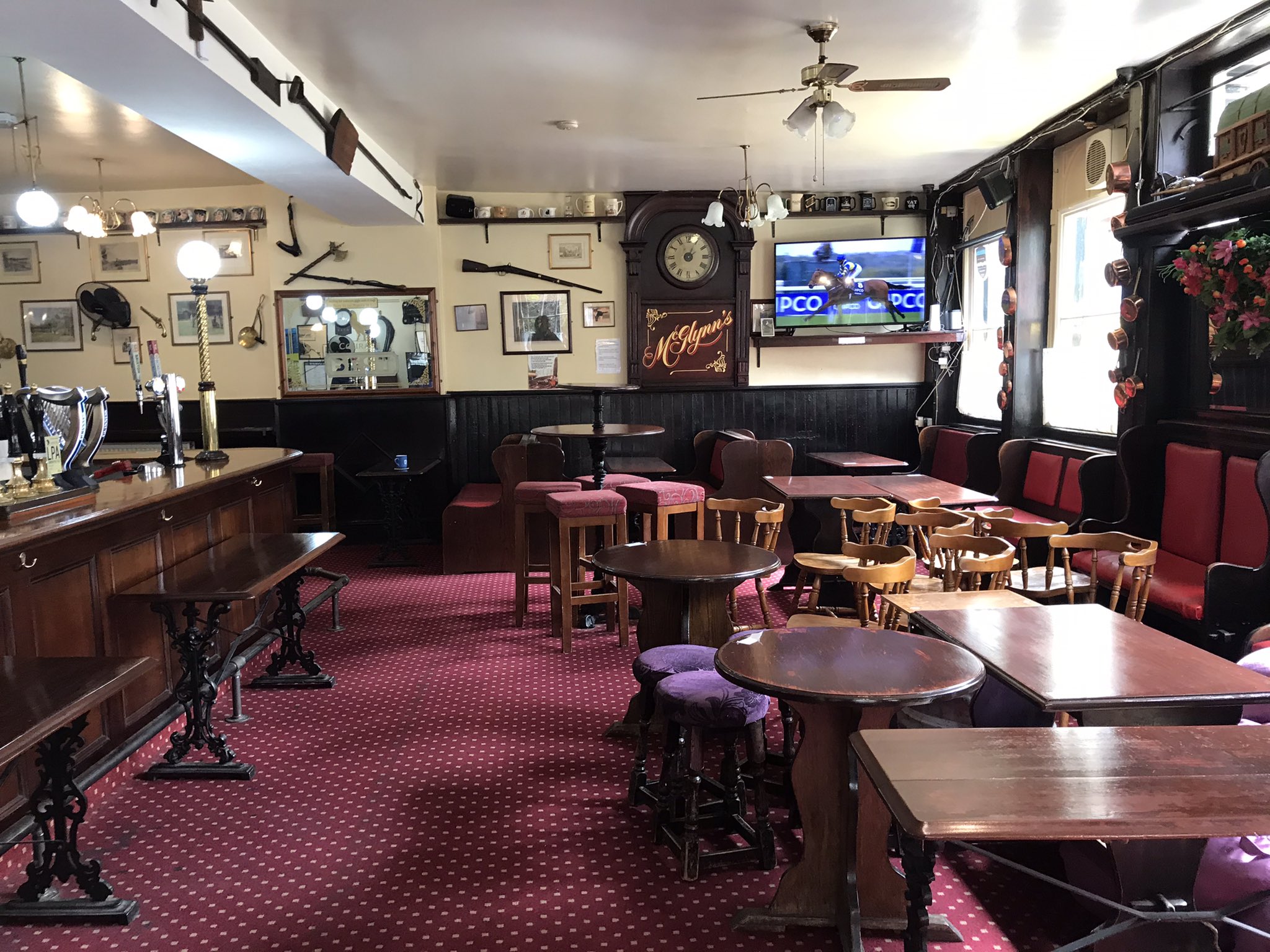
Jamila drew attention to how the pub was furnished, with its carpets and the presence of a cat giving it an almost domestic feel. In some cases, this sense of homeliness created by the furnishings reminded interviewees of their actual homes, or of other pubs from their childhood. As Harry described it:
‘so many pubs in London now are identikit, they are wooden floor, wooden table, wooden chair, sharp edges, there’s no round edges about them, metaphorical or literal…I went in [to McGlynn’s], and it felt a little bit like a pub from back home [in the West Midlands], the sort of thing where the carpet matched the upholstery, matched the – And it puts you at ease a bit more, and you relax a bit more.’
Similarly for Daniel:
‘it reminded me slightly of that working class vibe pub that I went to with my family when I was a kid. Not pretentious, just quite basic, you knew what you were getting.’
Meanwhile Michael recalled how, on being introduced to McGlynn’s by his then girlfriend:
‘I suddenly felt at home… I grew up in North London, there was a local pub to me that was run by an Irish landlord and it would have people of different walks of life in there. So you would have people from trades… you’d also have increasingly people in the media… actors and stuff like that, but all human life was there. And then when I walked into McGlynn’s, it also felt very similar to that: a kind of broad Irish publican who ran his bar, he knew how he wanted it to be run and, again, a parade of characters would come in there.’
While the idea of a pub as a ‘local’ normally refers to how a pub serves a particular residential neighbourhood, these interviewees stretched the concept. Daniel described how with the closure of McGlynn’s he’d lost his ‘work local’ – by which he meant the pub he liked to go to after work ‘where I know the people working behind the bar [and] there’s a certain amount of continuing banter over a long period of time’. Meanwhile, Harry described how he no longer had a ‘go-to’ pub in the area at which to meet friends and colleagues living in different parts of London.
At the time of our interviews, the future of McGlynn’s was uncertain. We heard that the current owners were planning to sell the building, but little information was available on who it might be sold to and what might happen to the pub. A fresh round of speculation that McGlynn’s might be sold to developers began in January 2025 when the pub was marketed for £3.15million. An article in the online publication My London declared emotively that McGlynn’s was being ‘sold off’, adding that ‘[the] listing leaves the future of the pub uncertain and at the mercy of any potential new buyers’. Social media users speculated that the large price tag would preclude it’s continued use as a pub: ‘If it could only be used as a pub, there is no way that it would be with £3 million +’ said one person on X.
And yet, in April 2025 the estate agents’ marketing the property announced that the pub had been sold and that McGlynn’s would ‘continue to be used as a public house’, adding that:
‘the new owner intends to keep the traditional style that patrons have enjoyed for many years, even down to the name, retaining the family legacy after 40 years of ownership.’
We have heard from local residents that the buyer of McGlynn’s is the world-renowned painter Peter Doig, who also owns the gallery project opposite and was a resident of the Hillview Estate in the 1980s. That McGlynn’s is apparently set to be ‘saved’ by a former resident of the Hill View estate seems fitting. In an area that has undergone dramatic changes in the past decades, going from a space associated with ruin, decay and vice to one of London’s fastest growing commercial districts, McGlynn’s (and before that, the Duke of Wellington) has represented a degree of continuity. While its clientele evolved over this time, our interviews with longstanding residents, staff and customers provided no evidence that the existing customer base was pushed out. And while our interviewees accounts mentioned instances of homophobia, racism and misogyny, which should not be brushed over, interviewees representing diversity across social differences of gender, race, sexuality, age and class, were much more likely to emphasise McGlynn’s as a space conviviality, accommodation and inclusivity. Hopefully the new owner, with his own link to the estate’s past, will ensure that McGlynn’s continues to play this role into the future.